What is the concept behind my photographs?
What do I want to get from this project?
What steps do I take next?
Taking a pause from going to my location to think about the project. Rather than returning and photographing the same things its making sense to sit down and think about what i want to get from this project and think about where it is going.
The main idea i have is the aspect of time within the town; this being how the buildings date back centuries and how over passing years more has been added, the town is growing. The close up shots that i have already taken i wanted to capture small parts of some of these buildings to show details within them, how these buildings are still stood after so many years. By excluding parts of the buildings from the frame it allows me to focus in on these details and avoid zoomed out shots showing what the building is for whether its a cafe, pub or shop etc as to me i want to look at them as general buildings as their purpose over time has most likely changed and by showing it for what its use is now puts a timeframe on them whereas taking that away you can look into details in the architecture of it and think about how old it is and what it could of been used for back then. I intend to go to their heritage museum there to get some local knowledge of the place and it's history and see how this could influence my project and what i already know - awareness of what the space used to be.
Friday, 1 April 2016

Thursday, 31 March 2016
Third Shoot

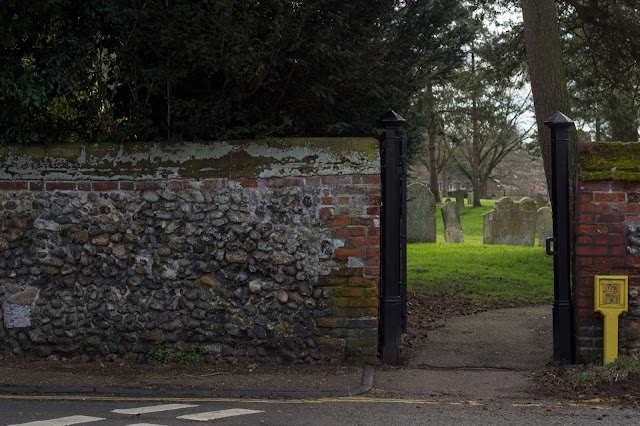


Thus being my third shoot i returned to a couple parts of the town to get different shots of buildings that i had shot to get variation but for the most part i wandered down roads that i hadn't previously while still focusing in on the structure and architecture of the buildings. As from my second shoot i found that i preferred some of my shots taken from a bit further back and the objects that were in the frame with them i looked around for objects that define a sense of time. Bringing a sense of human presence lingering; that someone may have been there recently, this was shown with things like the bike and the posters on the notice board, though it as you can't see them in detail it doesn't give away an era that they were taken in.
Wednesday, 30 March 2016
New Topographics
The New Topographics was a term created by William Jenkins in 1975, it described a group of American photographers whose work had a similar banal aesthetic; they were formal, mostly black and white prints of urban landscapes. Many of the photographers that were associated with new topographics were inspired by the man-made, their subject matters were things that were matter-of-fact. They had an exhibition at the International Museum of Photography in Rochester, New York featuring their works, the photographers with their work revealed growing unease of how the natural landscape was being eroded by industrial developments. This was different to the current landscapes that everyone was seeing as it was during the time of the pictoralism, a large amount of these landscapes were seen with such beauty and to be sublime where as this work looked at the subject objectively with no sentimental feeling, the images had a wide tonal range, fine grain and lots of detail.
Part of New Topographics, Bernd and Hilla Becher worked collaboratively together, documenting industrial German structures. They began their first project in the late 1950's.
The idea, they said once, 'is to make families of objects', or, on another occasion, 'to create families of motifs' - objects or motifs, that is, they continued, 'that become humanised and destroy one another, as in Nature where the older is devoured by the newer'.
Their goal was to create photographs that concentrated on the structures, avoiding any subjective interpretations. They found that structures are the 'architecture of engineers' and that their photos should be seen as the photography of engineers - record pictures. The composition in their photographs was clearly well thought about, being technical about it and looking at each side of the industrial structures at the same vantage point and distance away. They would take the photos on overcast days, so that there was a lack of shadows to enable their images to have great clarity. They would use similar lighting conditions throughout so that all of their prints would roughly have the same range of black, grey and white tones, trying to get as accurate recording of the structures as possible.
In the early 1960's they began to only show their work in typological groups, their Typologies are most often grids of black and white photographs, in which each picture in the grid is a different example of a type of industrial building or structure.
New topographics work has influenced the work that i have created for this project so far and will continue to do so as i find this approach to my subject is working well; looking at is objectively while being interested in its growth/change over time.
This image by Ansel Adams is an example of what new topographics were avoiding in their work, there was no sense of this beauty in their images, unlike here where it is seen as showing the beauty in the natural world, creating such a sublime image. Sense of attraction to these images, able to gain feelings for them and view them as more than what they are, it can make you think that lots of the world is like this though it is slowly being destroyed. Through use of vantage point it makes you think that the scene flows on outside of the frame even though it may not. Ideally this is what i would like to avoid in my work that i create.
Sources:
http://www.tate.org.uk/context-comment/articles/long-look-bernd-hilla-becher
http://www.tate.org.uk/art/artists/bernd-becher-and-hilla-becher-718
http://www.theguardian.com/artanddesign/2010/feb/08/new-topographics-photographs-american-landscapes
 |
| Pitheads 1974, Bernd Becher and Hilla Becher. |
Part of New Topographics, Bernd and Hilla Becher worked collaboratively together, documenting industrial German structures. They began their first project in the late 1950's.
The idea, they said once, 'is to make families of objects', or, on another occasion, 'to create families of motifs' - objects or motifs, that is, they continued, 'that become humanised and destroy one another, as in Nature where the older is devoured by the newer'.
Their goal was to create photographs that concentrated on the structures, avoiding any subjective interpretations. They found that structures are the 'architecture of engineers' and that their photos should be seen as the photography of engineers - record pictures. The composition in their photographs was clearly well thought about, being technical about it and looking at each side of the industrial structures at the same vantage point and distance away. They would take the photos on overcast days, so that there was a lack of shadows to enable their images to have great clarity. They would use similar lighting conditions throughout so that all of their prints would roughly have the same range of black, grey and white tones, trying to get as accurate recording of the structures as possible.
In the early 1960's they began to only show their work in typological groups, their Typologies are most often grids of black and white photographs, in which each picture in the grid is a different example of a type of industrial building or structure.
New topographics work has influenced the work that i have created for this project so far and will continue to do so as i find this approach to my subject is working well; looking at is objectively while being interested in its growth/change over time.
 |
| The Tetons and the Snake River, 1942, Ansel Adams. |
This image by Ansel Adams is an example of what new topographics were avoiding in their work, there was no sense of this beauty in their images, unlike here where it is seen as showing the beauty in the natural world, creating such a sublime image. Sense of attraction to these images, able to gain feelings for them and view them as more than what they are, it can make you think that lots of the world is like this though it is slowly being destroyed. Through use of vantage point it makes you think that the scene flows on outside of the frame even though it may not. Ideally this is what i would like to avoid in my work that i create.
Sources:
http://www.tate.org.uk/context-comment/articles/long-look-bernd-hilla-becher
http://www.tate.org.uk/art/artists/bernd-becher-and-hilla-becher-718
http://www.theguardian.com/artanddesign/2010/feb/08/new-topographics-photographs-american-landscapes
Tuesday, 29 March 2016
Second Shoot



Tutorial | Second

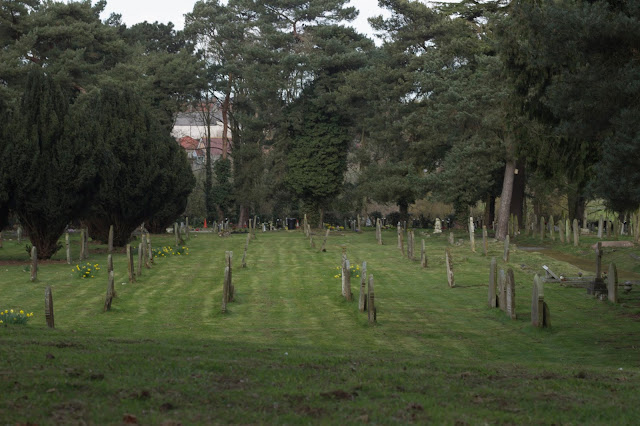
In our second group tutorial I presented un-edited photographs from my first shoot; of the town + exteriors. After discussing the town and that I'm interested in the history of the town, wanting to show historical context to the photographs it has been suggested that I keep away from the council and housing estates and look into rephotography - how I could use existing photographs and/or text and incorporate it with the photos that I take myself. I think that to gain historical context to my work that it would be a good idea to visit the local bridewell museum that they have and also look at books on the town and possibly surrounding areas. My idea at the moment is looking at the architecture and buildings with how it's a small town where most of the area is older but parts are being modernised, there's a sense that things are gone and new things have been added or been replaced. While it's been suggested to avoid churches, the Abbey could still be interesting to look at at there is parts of it that still exist plus parts have recently been rebuilt which adds to this modernising feel that the town has to it.
Monday, 28 March 2016
Richard Misrach
 |
| , |
 |
| , |
 |
| , |
 |
| , |
The series Golden Gate began in 1998, it is a collection of photographs which feature San Francisco's iconic bridge, in which he photographed in over the span of a few years; it studies weather, time, colour and light. In these images you can see the sun, generally it's hidden behind clouds but you can see the shine from it, creating a circular shape in the sky; its strength in brightness is determined from the time of day. The horizon line is low down; the images been taken from the same spot, this helps it focus on the studies surrounding it. In Cabbage Crop Near Brownsville, Texas and Wall, East of Nogales, Arizona the horizon line in these images are higher allowing more of the scene into the image rather than the sky. Though in his photographs the weather has a large impact on the images, this primarily being seen through the clouds as in the scenes the clouds/sky appears to be dramatic. This helps set mood around the piece; in regards to the work that i am producing i need to consider the mood that the sky could have on my images, would be best to look at the forecast to see what the weather will be like beforehand.
References:
http://www.artnet.com/artists/richard-misrach/biography
https://fraenkelgallery.com/artists/richard-misrach
Sunday, 27 March 2016
Edward Burtynsky
 |
| Homesteads #30 West of Merritt, British Columbia 1985. |
 |
| Homesteads #33 View from Trans Canada Highway. Near Kamloops, British Columbia 1985. |
 |
| Densified Oil Drums #4 Hamilton, Ontario 1997. |
Exploring the Residual Landscape
Nature transformed through industry is a predominant theme in my work. I set course to intersect with a contemporary view of the great ages of man; from stone, to minerals, oil, transportation, silicon, and so on. To make these ideas visible I search for subjects that are rich in detail and scale yet open in their meaning. Recycling yards, mine tailings, quarries and refineries are all places that are outside our normal experience, yet we partake of their output on a daily basis.These images are meant as metaphors to the dilemma of our modern existence; they search for a dialogue between attraction and repulsion, seduction and fear. We a re drawn by desire - a chance at good living, yet we are consciously or unconsciously aware that the world is suffering for our success. Our dependance on nature to provide the materials for our consumption and our caner for the health of our planet sets us into an uneasy contradiction. For me, these images function as reflecting pools of our times.
Edward explains how the photographs that he takes act as a function to reflect our time here and what we are doing to the planet, whether good or bad he is using photography as a way to document it and share with others. It gives insight to what you wouldn't see on a regular basis yet you have an impact on it looking this way. While these images are visually appealing, at a glance you may not pay much attention to what some of the subjects are but once you do the images don't appear as attractive to the eye; all being manmade you can see the destruction that humans are causing to not only the world around us but the things that we have made we are also destroying them. It makes you question what you are seeing before you.
In these photographs you see the natural world meet manmade objects. His works vary in vantage points, some looking downwards at the subject at an angle as apposed to being level with what he has photographed; this is seen in Homesteads #30, in the foreground of this image you can also see a grassy patch which slopes up suggesting that its a raised part of ground in which Edward was stood on to have been able to take the photograph from this angle. This view point looking out at the scene has enabled the viewer to see the tops of the roofs of the buildings and cars in the frame, which would have been missed if it were to be taken from a lower angle. Alongside this in the series Homesteads it shows that the elements stay the same even though the place may change, thus showing that if the places were not revealed to the viewer you may think that they were taken in one area of the country apposed to being in different areas. His work is filled with earthy tones, mixed with the textures of materials/objects and the shadows there is a gritty feel surrounding it; with the colours being dull it suggests that the photographs may have been taken on a cloudy day.
Sources:
http://www.edwardburtynsky.com/site_contents/About/introAbout.html
http://www.edwardburtynsky.com/site_contents/Photographs/introPhotographs.html
Subscribe to:
Posts (Atom)